

Public Intelligence 17: Seeing Like a State

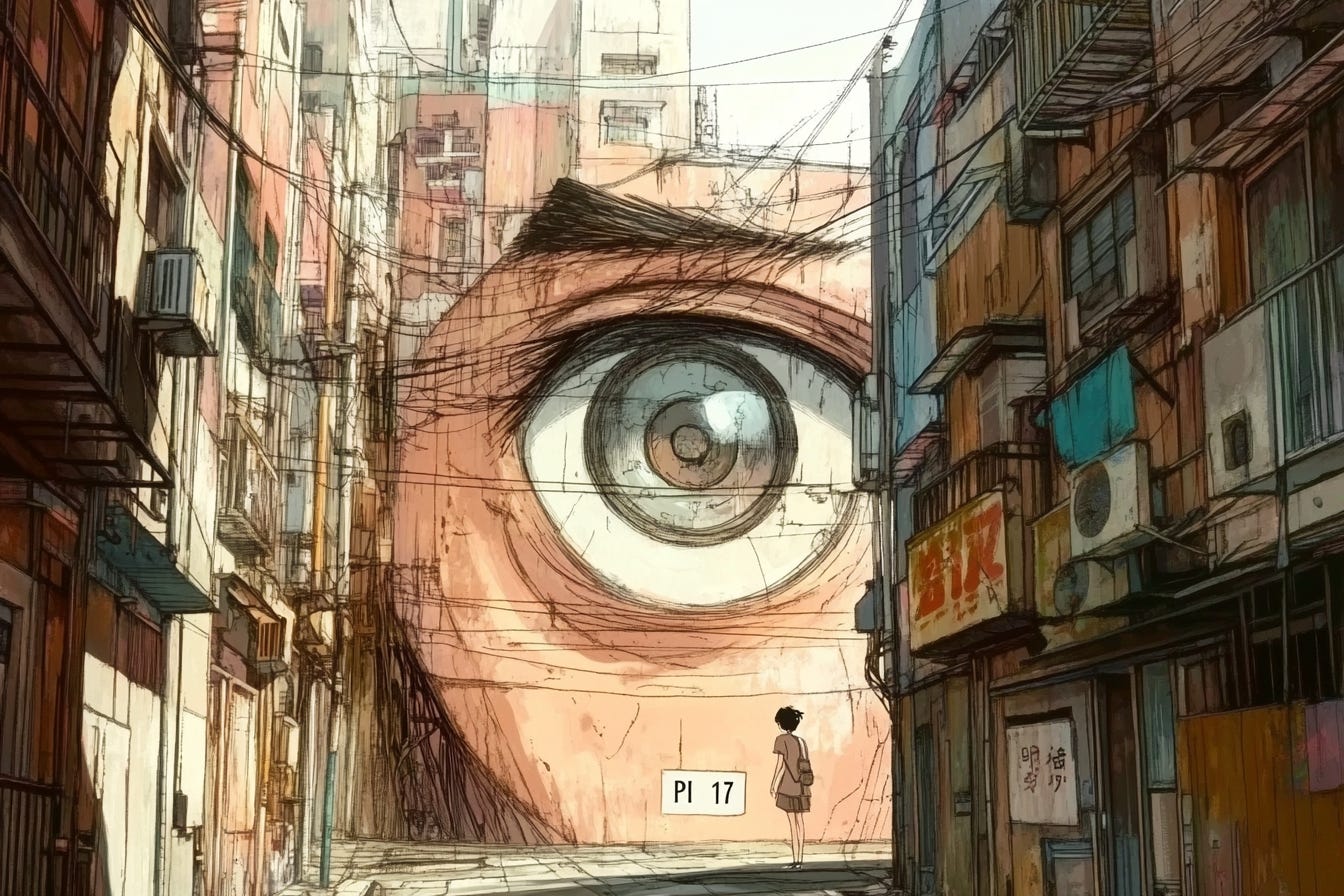
In the last essay, we explored how the state constructs shared reality, how that reality can both order and oppress, and what happens when it begins to break down. Eric Schliesser’s idea of the “articulate state”showed us how the state’s ability to communicate its truth plays a crucial role in maintaining cohesion. But what if the state’s vision of reality is itself a problem? This brings us to James C. Scott’s “Seeing Like a State,” which offers a powerful critique of the way states attempt to make societies “legible”—and how that legibility can lead to disaster.
The State’s Vision
Scott’s argument centers on the concept of legibility. For a state to govern effectively, it needs to see its people and their activities in a structured way. This means simplifying complex, local, and often informal systems into standardized forms that the state can count, tax, regulate, and control. Examples include cadastral land surveys that replace customary land use with rigid property lines, the imposition of surnames on populations that previously operated with kinship-based naming, and urban planning projects that overwrite organic settlement patterns with geometric precision.
At first glance, these efforts may seem rational—an attempt to bring order to disorder. But Scott argues that this process of simplification almost always leads to unintended consequences. Local knowledge, embedded in daily practice and shaped by historical context, is often too complex to be captured by state-mandated reforms. When states ignore or destroy these decentralized forms of knowledge, they create brittle, artificial systems that can collapse under their own weight.
High-Modernism and its Failures
Scott identifies a particularly dangerous form of state vision: high-modernist ideology. High-modernism is the belief that society can be scientifically planned and engineered, with reason and technical expertise replacing tradition and local practices. It is a vision of the world as something to be perfected through rational design.
High-modernism is seductive because it promises efficiency, progress, and modernization. It is what inspired grand projects like Le Corbusier’s plans for the ideal city, Soviet collectivization, and large-scale development schemes in newly independent nations. These efforts were guided by a faith in science, technology, and centralized planning as tools for social transformation.
But the problem with high-modernist schemes is that they assume knowledge is best produced at the center rather than the periphery. Local knowledge is seen as an obstacle to be cleared away, rather than a resource to be incorporated. The result is often catastrophic:
Urban Planning Disasters: The city of Brasília, built from scratch in the 1950s, exemplifies the failures of high-modernist planning. Designed with wide boulevards and meticulously zoned areas, it looked great on paper but proved inhospitable for the people who lived there. The city was alienating, inefficient, and devoid of the organic spaces that make urban life vibrant.
Agricultural Catastrophes: Soviet collectivization sought to replace traditional farming methods with large-scale mechanized agriculture. The result was famine, as the planners failed to account for the complexity of soil conditions, weather variations, and local farming expertise.
Failed Development Schemes: In postcolonial nations, attempts to rapidly modernize often followed high-modernist logic, with states pushing industrialization and urbanization while dismissing the economic and social systems that had long sustained local communities. These top-down interventions frequently led to economic dislocation and social unrest.
The lesson is clear: when states impose simplified models onto complex realities, disaster follows.
The Blind Spots of State Power
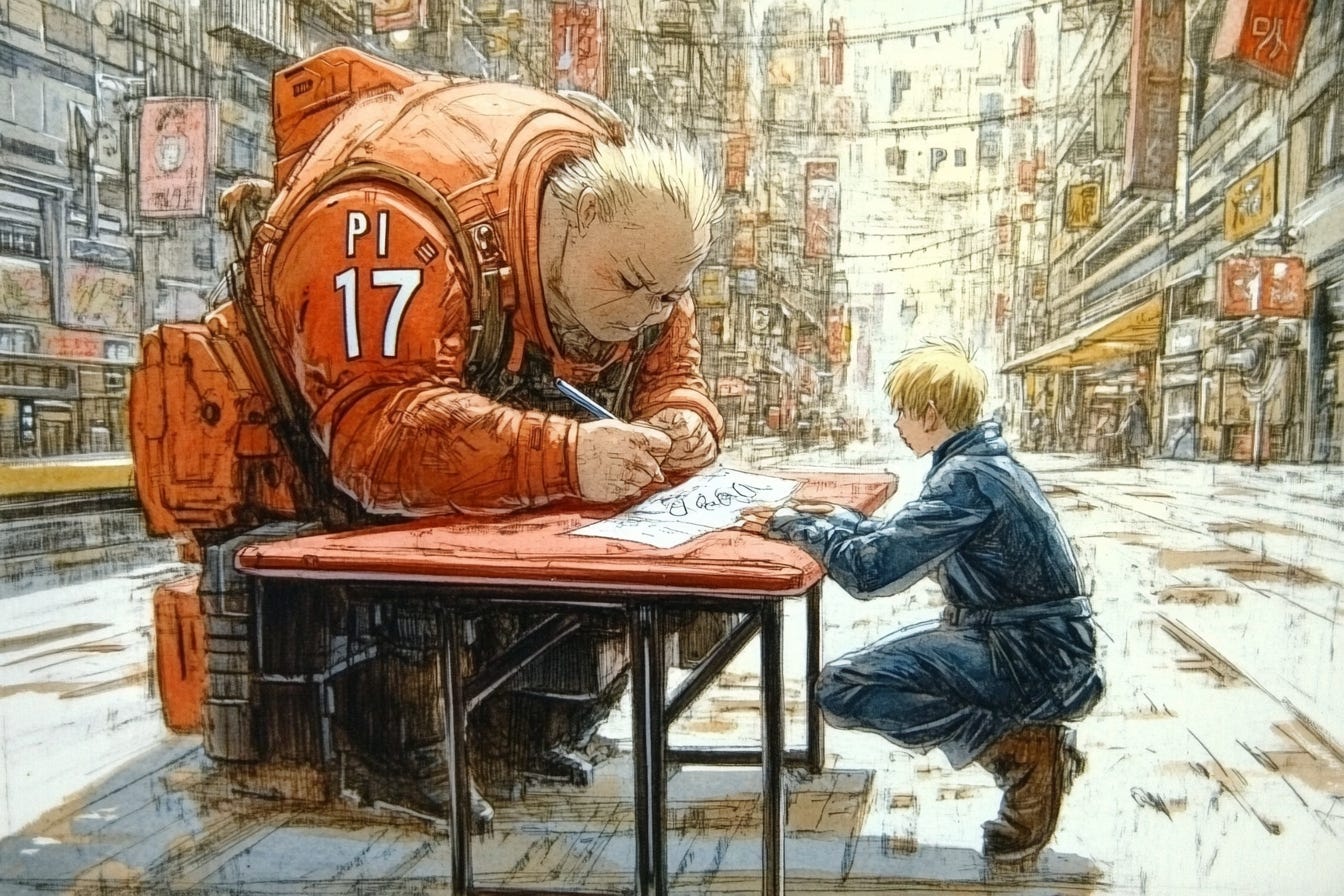
Scott is not arguing that states should never intervene or that traditional practices are always superior. Instead, he highlights the dangers of seeing the world through a single, abstract lens. States, by their very nature, are unable to comprehend the full richness of local life.
One way to think about this is to contrast metis (practical, experiential knowledge) with techne (formal, abstract knowledge). Metis is the knowledge of farmers who understand the subtleties of their land, of traders who navigate informal markets, of builders who adapt materials to local conditions. Techne is the knowledge of experts who design policies, engineers who draft blueprints, economists who model societies in statistical terms.
Scott argues that states tend to privilege techne over metis, assuming that the former is objective and scientific while the latter is merely anecdotal or backward. But metis is what allows people to survive and thrive in complex environments. When states dismiss metis, they lose their ability to adapt.
Resistance and Alternatives
What happens when people refuse to be made legible? Scott explores this question in his later book, The Art of Not Being Governed, where he examines societies that have historically evaded state control. From highland communities in Southeast Asia to fugitive slave settlements, people have often chosen to live outside the state’s gaze.
But resistance doesn’t only happen at the margins. Even within heavily governed spaces, people develop weapons of the weak—subtle, everyday forms of defiance. Farmers quietly maintain unofficial land arrangements despite state-mandated property laws. Workers slow down production without outright rebellion. Citizens find ways to navigate around bureaucratic constraints.
This everyday resistance suggests that while the state may seek to impose its vision, reality is always more complicated than it appears on paper.
Seeing Like a State in the Digital Age

Scott’s analysis of state vision is more relevant than ever. Today, we are witnessing new forms of legibility driven not just by states but by digital technologies. Governments, corporations, and AI-driven platforms are mapping, categorizing, and optimizing human behavior at an unprecedented scale. The old high-modernist dream of a perfectly ordered society is now being pursued through big data, machine learning, and algorithmic governance.
But the risks remain the same. Just as the planned cities of the past ignored the organic rhythms of urban life, algorithmic decision-making often fails to capture the nuance of human experience. Predictive policing, social credit systems, and automated welfare programs operate with the same logic of simplification and control that Scott critiques. They turn people into data points, reducing complex lives to numbers on a screen.
The question we face is whether this new digital legibility will be more adaptive or whether, like the failed schemes of the past, it will collapse under the weight of its own hubris.
Back to the State’s Truth
In the previous essay, I described the energy of India’s post-independence imagination—the moment when a new shared reality was forged. That imagination was not just about material development but about creating a vision of what it meant to be Indian. The five-year plans, the grand infrastructure projects, the secular and scientific ideals—all were part of the state’s truth.
But if Scott teaches us anything, it is that the state’s truth is always incomplete. The state’s attempts to create order inevitably clash with the unruly reality of lived experience. And when the state becomes too rigid in its vision, it risks alienation, failure, and resistance.
So where does this leave us? If the old shared realities are breaking down, and new actors are stepping in to shape them, how do we avoid the mistakes of the past? Can we imagine forms of governance that acknowledge complexity rather than suppress it? Can we build institutions that listen as well as dictate?
Scott gives us a framework for understanding why states fail. But understanding failure is only the first step. The harder question is: what comes next?
To be continued…